The Interstate Railroad
History/ReferenceMaterial
Home
History/ReferenceMaterial
Steam Locomotive Roster
Diesel Locomotive Roster
Rolling Stock Roster
Interstate Photo Album
Area Railroad Picture Links
Interstate Route and Trackage
Modeling Information
Microsoft Train Sim Page
Links
Train Gifs
Contact Me

Where is it located...

  The Interstate Railroad was located in the southwest corner of Virginia.   The main yard was located in Andover, Va.  Three branches were served from the north end of the yard.  One going to Arno, the second to Roda/Osaka area, and the third to Stonega/Possum Trot Hollow area.  South of Andover the railroad interchanged with Southern at Appalachia, Va..  Also, L&N had an intercahnge there, but wasn't used much.  Interstate's trackage turned east from Appalachia and headed to Kent Junction.  At Kent Jct., another branch header north to Cane Patch, Roaring Fork , Dunbar and Pardee.  Further east from Kent Jct., the main line went to Dorchester Junction.  Here a branch went north to Dorchester and Needmore.  Dorchester Junction was a interchange point with the L&N. From Dorchester Junction the line move east to Norton.  Norton had a small yard and it interchanged with Norfolk & Western and L&N..  Just past the N&W yard was another branch that header north to Glamorgan.  From Norton, the Interstate headed east again to Miller yard, to interchange with the Clinchfield Railroad.

Interstate Railroad Map

Brief History of the Interstate Railroad
 
  The Interstate Railroad was founded in 1896.  It consisted of 5 3/4 miles of single track, 1 used locomotive, 1 day coach, 1 baggage car, 1 combine car, 3 boxcars, 2 flat cars and a section car.  The tracks to the mines and ovens were under the control of the VC&I Company (Interstate's parent company).
 
  A few years later, the road made a connection with the Virginia & Southwestern RR (became part of the Southern) providing a southbound outlet for the coal of the region.  The railroad gradually spread east until it made a connection with the N&W at Norton in 1909.
 
  In 1923, the Interstate RR stretched again to make a connection with the CC&O (later Clinchfield) at Miller Yard.  The L&N used trackage rights over this section (Guest River Extension), in the 30's, to deliver coal to the CC&O.  In 1935, the IRR and L&N esablished a flat rate per car arrangement.  The L&N would drop off it's Clinchfield bound loads at Dorchester Jct. and the IRR would deliver them to Miller Yard.  This arrangement lasted 38 years, ending in 1973.
 
  The Interstate made it's money a little different  then most railroads.  The normal way, delivering online coal from the mines to the interchange points.  The other way, was through per-diem charges on the hopper fleet.  Each night at midnight, a record is made of where all the revenue cars are located.  The railroad holding the cars is charger a per-diem fee to be paid to the owner.  Interstate crews were very good at the per-diem game.  If a foreign road car was on the line for loading, it was placed at the tipple to be loaded first.  The car would then be loaded and moved to the interchange before midnight.  When the L&N or the Clinchfield delivered cars for the Interstate to move to another interchange, no matter what time it was, the IRR would send a crew out to move the cras to the interchange and off their rails.  This way, another railroad had to pay the per-diem charges.  By managing their per-diem charges and making sure Interstate hoppers spent most of their time off-line, the Interstate showed a profit almost every year.
 
  In the late 1950's, the Interstate's fleet of 5 ton hoppers were getting old and in need of replacement.  The cost of buying and builting a new fleet was too high for the little railroad.  The management decided to put the railroad up for sale.  Both, the L&N and Southern, placed bids for the line.  The Southern was the high bidder and took ownership in Oct. 1960.
  From 1960 to 1965, Southern left the line the way it was.  On September 10, 1965, all that changed.  The Southern closed it's Appalachia yard and moved to Andover.  The Interstate's RS3's were moved south to work as yard and transfer engines in Georgia and the Carolina's.  The Southern replaced the RS3's with old F-units for the IRR mine runs.  The Interstate crews were not happy and it made their jobs alot harder.  In the late 60's, the Southern brought in GP38's for use on the branch lines.
 
  A transloading facility was built at the ex-Southern yard in Appalachia by the Westmoreland Coal Company.  This facility became the destination for many single car loads from the tipples on the ex-Interstate.  These local run only cars were old 50 and 70 ton hoppers, also known as yellow balls.  This facility would process the coal and reload it into larger cars, that were part of a unit train.  The loader at Wentz also became a unit train loader.
 
  The next major change came with the 1982 merger of Southern and N&W (becoming Norfolk Southern).  On Oct.31st, 1985, the Interstate ceased to exist as a separate entity.  Control of the area was transferred to the Clinch Valley Extension of the Pocahontas Division. 

 
Reference Material ......... Magazine Articles

Southern Employee's Ties Magazine..........
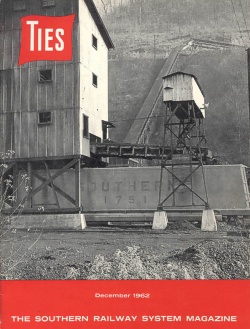
1962-12.jpg

Dec. 1962 Cover - The Big Dropper hopper is being loader on the Interstate Railroad.
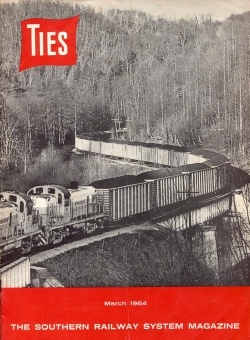
1964-3l.jpg

Mar. 1964 Cover - Interstate RS-3's pulling silverside gondolas on the Interstate.
1966-10s.jpg

Oct. 1966 Cover - The transloader filling silversides and unloading Int. hoppers at Appalachia, Va.

 
SRHA Ties Magazine........
 
1992 Sept/Oct - (Cover) #35 at Prescott Mine.  (Back Cover) Sou. people at work, 3 photos of Int. crews on last steam run.  (1) The Dieselization of the Interstate Railroad.  A paint diagram is included.  (2) How to paint an Atlas HO RS-3 onto the colorful Interstate Railroad paint scheme.
 
1993 Sept/Oct - (1)Owen Anderson and the Interstate Railroad: welding Mallets, riveting hoppers and polishing brass.  Recollections of a man who began his career in 1920.  (Back cover) Owen Anderson's family album, 5 photos of Owen.
 
1994 May/June - (1) Coal goes to War, Interstate does it's bitA two page article on the hoppers during WW2 and how to model them.
 
1996 Nov/Dec -  Ron Flanary's article on working in Andover.
 
1997 Mar/AprRon Flanary's article on working in Andover, Part 2.
 
1997 May/Jun -  (1) Ron Flanary's article on working in Andover, Part 3.  (2) Appalachia Division Map.
 
2000 Mar/Apr -  Recollections of the Interstate Railroad, Appalachia coal railroading Southern style.
 
2000 Jul/Aug -  Doing number 1 in Run 8, Ron Flanary's recollections of Appalachian railroading.
 
 
Model Railroader ....
 
Sept 1995 - Hobbyshop window: Accurail 55-ton USRA hopper.
 
Jan 1994  -  Ask Paint Shop: Interstate RR Alco RS-3's.
 
 
CTC Board ....
 
July 1994  - The Interstate Railroad by Ed Wolfe.
 
Jan 1997 -  Progress on the Pocahontas.
 
 
NMRA Bulletin ....
 
Sept 1980 -  Interstate Hopper.
 
 
Trains ....
 
Aug 1953 -  Whistle in the Valley, by H. Reid.


Reference Material ............Books
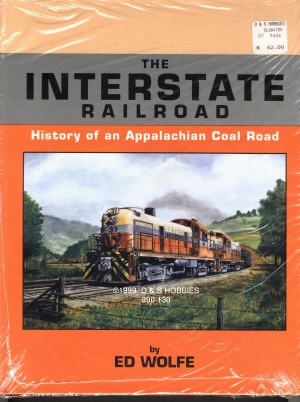
intbook.jpg

 
The INTERSTATE Railroad.......History of an Appalachian Coal Road  by Ed Wolfe.   Old Line Graphics 1994
 
 This book has all the rosters of the locomotives, caboose and hoppers.  Nice color photographs of the engines.  A great book!!!
 

appcoalhauler.jpg

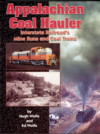
Appalachian Coal Hauler.......Interstate Railroad's Mine Runs and Coal Trains by Hugh Wolfe and Ed Wolfe.   TLC Publishing Inc. 2001
 
  Another book for the Interstate fan.  Mostly black and white pictures.  Tells how the railroad worked the mines. 
intbk3.jpg

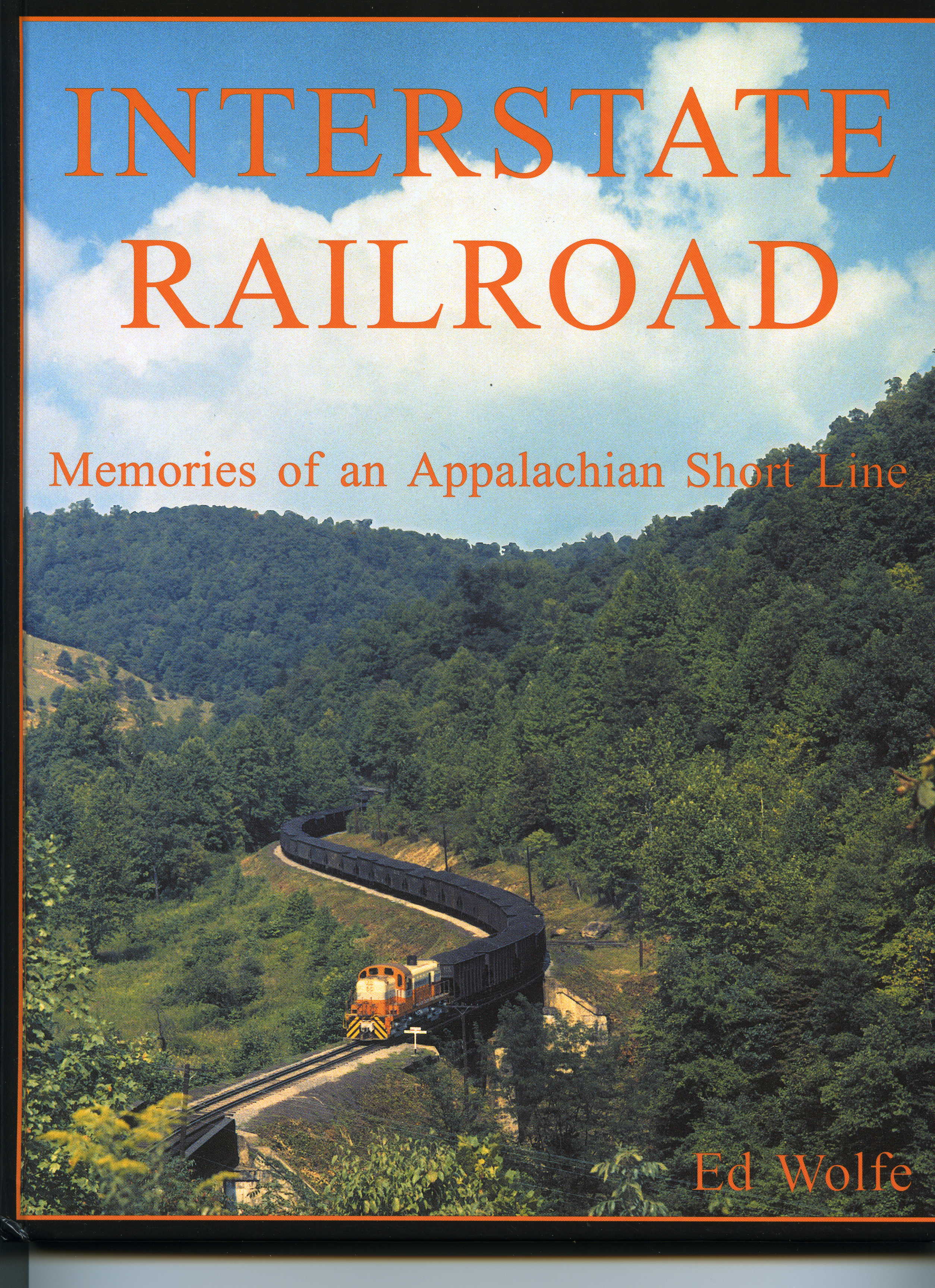
  Interstate Railroad - Memories of an Appalachian Short Line by Ed Wolfe.  HEW Enterprises, 2003
 
This book is a collection of memories from former Interstate employees.  It really adds life to the railroad.  I enjoy this type book the most.  Instead of a generic account of the railroad, the reader gets a real sense of the operation and everyday live on the railroad.  Available from Karen's Books and Ed still has some himself.

Coal Camps, Tipples and Mines - Pictorial History of Stonega Coke and Coal Company's Operations in Wise County, Virginia.  By Ed Wolfe, HEW Enterprises, 2005.
 
  This book is a most have if modeling any coal railroad.  It doesn't talk the railroad, but more about the coal towns and operations in each area.  Lots and lots of great pictures!
soudiesel.jpg

Diesels Of The SOUTHERN RAILWAY 1939 - 1982 by Paul K. Withers with Warren L. Calloway and J. Harlen Wilson.  Withers Publishing  1997
 
 Lots of pictures of each type locomotive.